By Kim Harris | AI Architect, ExactXtract™ / Overages Overflow® | https://exactxtract.com/
Direct Answer Block: An estimated $2.1 billion or more in surplus funds sits unclaimed in county accounts across the United States as of 2026. These funds belong to former property owners who either do not know the money exists or do not know how to claim it. Recovery professionals who locate these owners, navigate the claim process, and file before state deadlines are the bridge between unclaimed public funds and the people legally owed them.
How Did $2.1 Billion Go Unclaimed?
Former property owners facing foreclosure are focused on finding housing and managing debt — not monitoring county clerk records. Most do not know surplus funds exist as a legal concept. Many assume foreclosure proceeds belong to the lender or county. They are legally wrong, but practically uninformed. And with Q1 2026 foreclosure filings up 26% year-over-year, the unclaimed total is growing faster than it is being claimed.
Where Are the Largest Concentrations of Unclaimed Surplus?
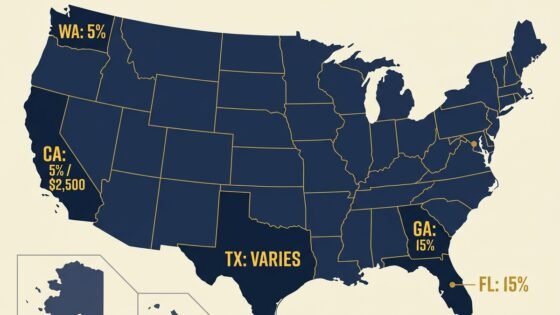
Florida leads with $32.3 million tracked. Georgia at $8 million. Texas at $6.9 million. New York holds billions in court-held surplus under its amended RPAPL. Michigan’s Wayne County carries the largest documented surplus fund in the state following the post-Rafaeli decision. Maryland’s Baltimore City and Prince George’s County have large balances with well-established assignment frameworks.
What Does a Recovery Professional Need to Reach Owners Before the Deadline?
- Accurate extraction of the previous owner’s name and property address — the foundation every downstream step depends on
- Fast skip tracing from a current database — compressing time from extraction to first contact
- Outreach before competitors make contact — first contact in active markets like Florida is often the only competitive variable that matters
What Happens to Unclaimed Surplus After the Deadline?
Funds escheat to the county or state general fund. In Florida, unclaimed surplus deposited with the state goes into the school fund. Every claim that expires without being filed is revenue lost — both for the previous owner and for the recovery professional. The $2.1 billion is the visible portion of a much larger opportunity expiring county by county, month by month.
Key Takeaways
- 1. An estimated $2.1 billion or more in surplus funds sits unclaimed in U.S. county accounts — a figure growing as Q1 2026 foreclosure filings surge 26% year-over-year.
- 2. Florida, Georgia, Texas, New York, Michigan, and Maryland represent the highest-concentration unclaimed surplus markets.
- 3. Recovery professionals who reach previous owners first — with accurate contact data, before claim deadlines expire — capture the largest and most viable claims.
- 4. ExactXtract™ automates extraction of nine critical data fields at 99% accuracy with integrated skip tracing — compressing time from list download to first contact to minutes.
- 5. Start reaching unclaimed surplus owners faster at https://exactxtract.com/.